Physical Address
304 North Cardinal St.
Dorchester Center, MA 02124
Physical Address
304 North Cardinal St.
Dorchester Center, MA 02124

What used to be a game of cost + efficiency is now a game of alliances + security—where tariffs, sanctions, and export controls are used like chess moves to shape outcomes. And it’s not just superpowers doing it: even regional neighbors are starting to “weaponize” trade.
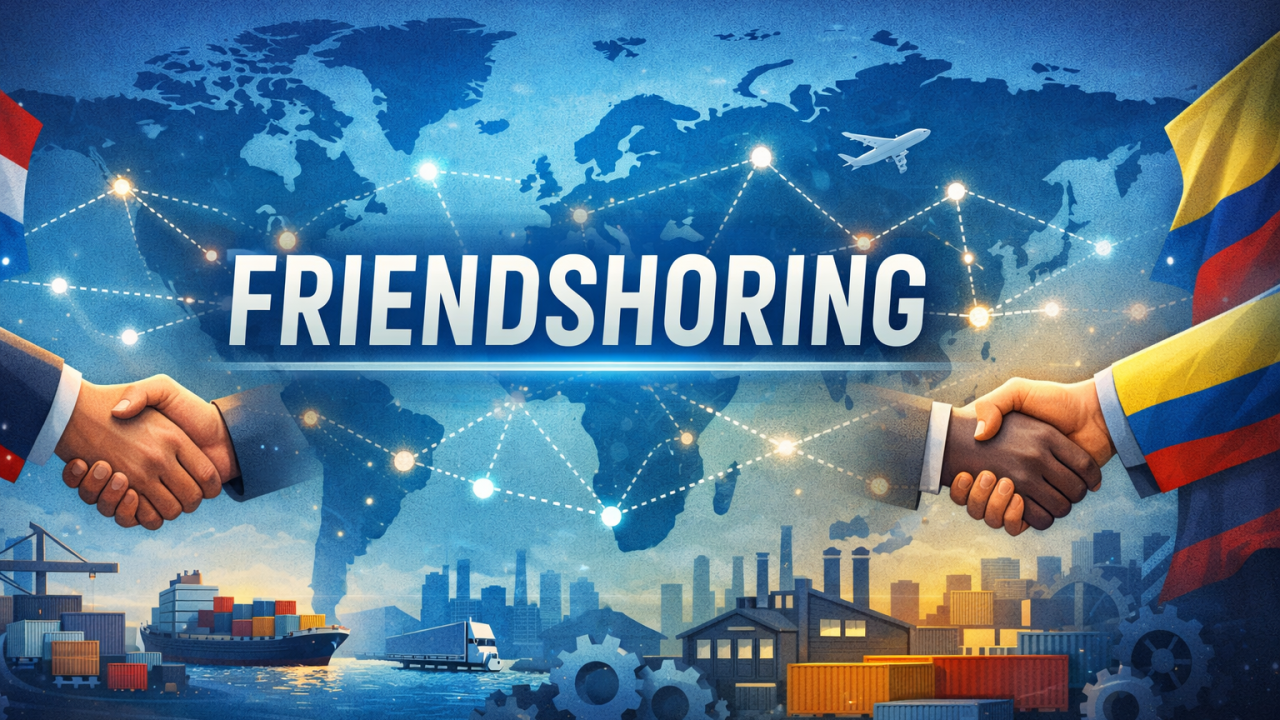
This week I heard a term that captures the shift perfectly: friendshoring. Let’s break down what it means, why it’s replacing nearshoring, and what Davos just signaled about the supply chain reality for 2026.
For decades, the global system ran on one logic: efficiency (lowest cost, just-in-time, hyper-specialization).
That era is fading. Today’s trade decisions increasingly sit inside a geopolitical equation:
In short: trade is now a lever of national strategy—not just business optimization.
This week delivered a perfect “small headline, big meaning” moment.
Ecuador announced a 30% tariff on Colombian goods starting February 1, 2026, framing it around security and border cooperation. Colombia responded with its own tariffs on Ecuadorian products and even suspended electricity exports to Ecuador.
Why this matters:
The first response to this new world was nearshoring (closer supply chains).
But now we’re moving further: friendshoring (aligned supply chains).
This shift was explicitly popularized by U.S. Treasury Secretary Janet Yellen, who argued for “friend-shoring” supply chains across trusted partners to reduce exposure to hostile jurisdictions.
And Davos 2026 basically screamed the same message: trade is being redesigned around geopolitics, resilience, and re-routing.
Nearshoring means relocating production or sourcing to nearby countries (often same region/time zones) to reduce:
North America manufacturing: Many firms have shifted parts of production to Mexico to shorten supply lines and serve the U.S. market with faster logistics and regional integration (a classic nearshoring play).
Friendshoring means building supply chains concentrated in political & economic allies, even if it’s not the cheapest route.
It’s not just “closer.” It’s safer (politically).
Advanced computing / AI chips are increasingly treated as a strategic asset—export rules, licensing, and oversight debates are actively shaping who can access what. This is friendshoring logic in practice: tech flows increasingly follow alignment.
A few key signals from Davos this month:
Leaders and trade officials described a world adapting to tariff shocks and re-routing dependence away from single hubs.
Not cyclical disruption—persistent volatility is the baseline. A World Economic Forum supply chain report emphasized that resilience is now treated as a growth driver, not a defensive cost.
Boston Consulting Group (BCG) ’s latest work frames trade as reorganizing into major nodes (US, China, plus groupings like “Plurilateralists” and “BRICS+”).
The tone in Davos Lodge reflected how aggressively tariffs are being used—and how fast other corridors are being built around that risk.
Here’s what to expect this year as the trade reset accelerates:
Firms will keep parallel suppliers across blocs (even if margins suffer).
Export controls, certifications, licensing, sanctions screening… this becomes day-to-day operations.
Trade routes and industrial clusters will deepen regionally (Americas / Europe / Asia networks), while cross-bloc exposure gets selectively reduced.
Your landed cost now includes a hidden line item: geopolitical risk premium.
Ecuador–Colombia is a reminder that even regional partners can flip policy fast—supply chains need contingency planning.
We’re entering an era where the key competitive advantage isn’t only cost—it’s route design:
In 2026, the winning companies won’t just have supply chains. They’ll have geopolitical supply strategies.