Physical Address
304 North Cardinal St.
Dorchester Center, MA 02124
Physical Address
304 North Cardinal St.
Dorchester Center, MA 02124

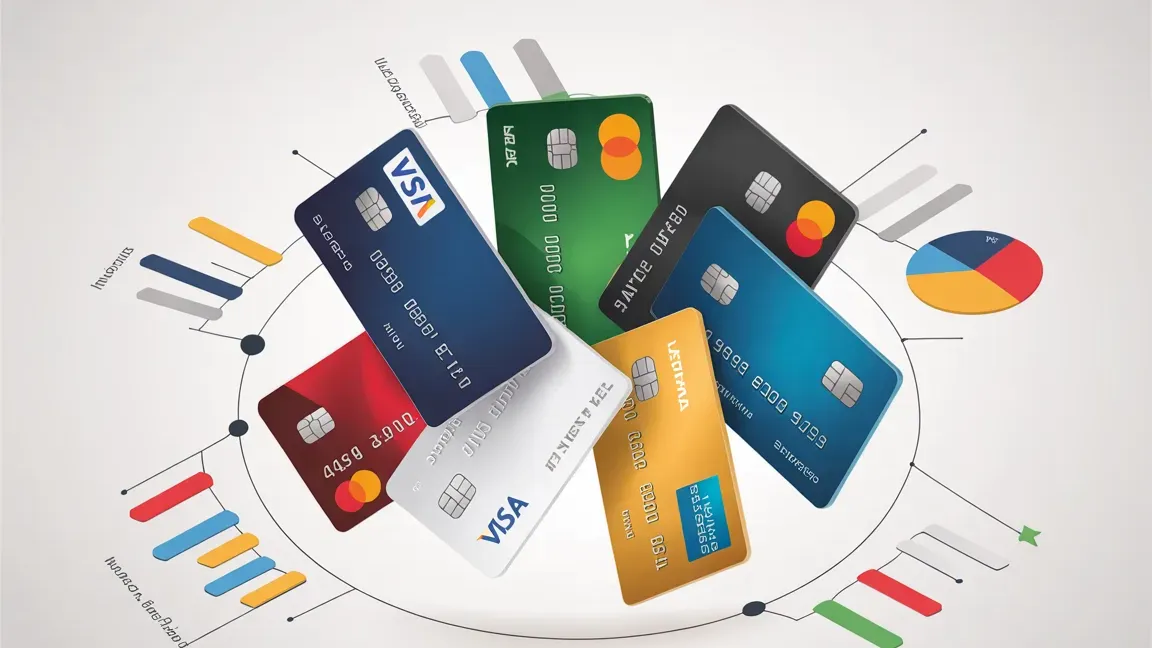
For weeks, I analyzed different credit card options. My objective was simple:
I don’t need debt. I want leverage.
At this stage, a credit card isn’t a necessity for me — it’s a tool.
But before choosing one, there was serious research behind it. And that research changed how I see the entire credit card industry.
At a basic level, credit cards serve two core functions:
If your goal is purely utilization + credit score building,
a free Visa or Mastercard from your bank is usually enough.
But once you go deeper, you realize the landscape is more strategic than it looks.
For decades, global card payments have been dominated by a duopoly:
Both primarily operate as networks. They:
Then there’s a structurally different player:
Amex is both:
That vertical integration changes incentives, margins, and positioning.
There are two broad categories of cards:
Best for:
They charge annual or monthly fees.
At first glance, it sounds irrational. Why pay to spend?
But if you:
You might offset the annual fee with just one trip per year (look for discounts / benefits).
That’s when I realized something important:
A credit card is essentially a financial subscription product.
If your spending matches the reward design, the math can work in your favor.
If not, you’re subsidizing someone else’s lounge access.
Here’s where it gets interesting.
Merchants often pay higher transaction fees to accept Amex.
I saw this firsthand. A taxi driver told me last week:
“Preferably don’t pay with American Express — the commission is higher for us”
That’s not accidental. It’s design.
Amex doesn’t compete purely on infrastructure. It competes on:
Its Membership Rewards ecosystem is heavily centered around:
Which signals something very clear:
Amex optimizes for higher average ticket size.
Small merchants dislike the fees.
Large merchants benefit from high-spending customers.
Amex targets purchasing power behavior, not mass penetration.
Credit cards don’t just facilitate spending. They shape it.
Studies consistently show:
And as inflation pushes nominal prices higher, average transaction values naturally increase.
For networks and issuers, that’s powerful.
Higher ticket size = higher interchange revenue.
Payments scale with economic activity.
The structural drivers behind card growth:
Amex has leaned into:
It’s not trying to win everywhere. It’s trying to win where margins are thicker.
After running the numbers, I chose the lowest-tier Amex aligned with:
I’m not using it for debt. I’m using it for:
Structured spending + signaling + rewards optimization
And that’s very different.
American Express doesn’t try to be universal.
It tries to be aspirational. That positioning allows it to:
You don’t need to be a millionaire to hold one. But you do need to understand what you’re buying.
Not just a card. A financial ecosystem with identity attached.
Pay in full. Always. Interest destroys the economics.
Does your lifestyle match the reward structure?
If you’re out with friends, offer to pay the bill. Accumulate the points. Get reimbursed via Bizum.
You increase:
Without increasing real consumption.
Every card is a behavioral design machine. Understand what game you’re entering.
Don’t be afraid of credit, just use it wisely.